
Does The NFL Have A Quarterback Development Problem (9-5-26)
By: Nyle Griffin
Headline Photo Credit: Trevor Ruszkowski-Imagn Images
Over the past few years, the NFL has introduced a wealth of potential new stars. Without fail, the most intriguing position in the eyes of the fans, media, ownership, players and more has always been one position: quarterback. The one position in football that can change a franchise overnight has now become almost impossible for teams to figure out, no matter how high of a draft pick you have. This begs the question: does the NFL have a quarterback development problem?
The first thing that many people do is compare draft classes. Why? Because throughout NFL history, there have been multiple busts in every draft class, which is commonplace at the quarterback position. However, over the last decade, it feels likewe have seen more quarterbacks than ever who have been drafted in the first round fizzle out quickly; names drafted in the first round in recent history since the 2016 draft class include guys like Paxton Lynch, Mitchell Trubisky, Josh Rosen and in the last half-decade, guys like Zach Wilson, Kenny Pickett, Anthony Richardson and more. These are quarterbacks many people across the NFL landscape have labeled “busts.”
A shocking name you would have found on this list just a couple of years ago is 2026 Super Bowl champion quarterback Sam Darnold of the Seattle Seahawks. Before Darnold rose to prominence, he had the reputation of being one of the biggest draft busts in NFL history, drafted third overall in the first roundof the 2018 draft by the New York Jets; his story is the perfect example of how a team’s development of a quarterback can make or break their career.
As the quintessential example of quarterback development, I would argue there is no better player to illustrate the issue; many players have found themselves in Darnold’s position with a plethora of different franchises. Yet, most have never found the same career resurgence he has. This begs the question: is quarterback development a broad issue across the league? I would argue yes.
Darnold entered the league in 2018 with the New York Jets, where he stayed for three years. During those three years, he had two different head coaches, two different offensive coordinatorsand two different quarterbacks coaches (2018-2020). His head coach going into his rookie year was Todd Bowles, and his offensive coordinator and quarterbacks coach was Jeremy Bates,who played both roles in developing and coaching Darnold.
In his rookie year, Darnold struggled more than people expected. Darnold came out of USC as a star player, going 20-4 as a starter and leading the Trojans to a Rose Bowl win in his redshirt freshman season. He also won the Archie Griffin Award as the nation’s top freshman; he would finish his college career with 7,229 passing yards, 57 passing touchdowns and 22 interceptions in 27 games played. Many analysts anointed Sam Darnold as the most talented and pro-ready quarterback in his draft class, expecting some struggles early in his rookie season but also expecting plenty of high flashes of franchise-playerpotential.
Darnold started right away in his rookie year; named the Week 1 starter, he was only 21, one of the youngest quarterbacks in NFL history to start. He finished his rookie season appearing in 13 games, throwing 17 touchdown passes and 15 interceptions; Darnold threw almost as many interceptions as touchdowns, andthe Jets went 4-9 under Darnold. In his last two years in New York, his coach was Adam Gase, who replaced Todd Bowles and brought in an almost completely new staff; more importantly, he hired offensive coordinator and quarterbacks coach Dowell Loggains to replace Jeremy Bates. Darnold and many other quarterbacks across the league face this issue every year: when a new head coach or coordinator is brought in, theyusually bring in a brand-new offensive system and playbook with them, which often takes a lot of time for quarterbacks to adjust to.
Darnold had four different coaches in three years; in his last two seasons with the Jets, he threw 28 touchdowns and 24 interceptions. He would be traded to the Carolina Panthers in 2021 in exchange for a 2021 sixth-round draft pick, a 2022 second-round pick and a 2022 fourth-round pick. He would haveanother rough stint in Carolina, two years under head coach Matt Rhule, who was eventually fired and replaced by interim head coach Steve Wilkes. He had three different offensive coordinators in two years: Joe Brady, Jeff Nixon and Ben McAdoo. His only coach that remained on staff during his two years in Carolina was quarterbacks coach Sean Ryan.
Darnold would then spend his sixth season in the league with a quiet year in San Francisco as a backup to Brock Purdy after signing with the team as a free agent. He was coached by Kyle Shanahan and quarterbacks coach Brian Griese; Shanahan,recognized as one of the league’s best head coaches, helpedjumpstart Darnold’s development.
Finally, after his one-year stint with the 49ers, Sam Darnold would experience a career resurgence with the Minnesota Vikings under the guidance of head coach Kevin O’Connell. O’Connell has the moniker around the league as the “quarterback whisperer” because he has consistently foundsuccess maximizing his quarterbacks’ potential; guys such as Kirk Cousins, Matthew Stafford and other well-known quarterbacks across the league had found success underO’Connell before Darnold’s arrival in Minnesota.
After signing a one-year deal with the Minnesota Vikings in March 2024 as a free agent heading into his seventh season,Darnold would have the opportunity to enter the season as the starting quarterback in a shallow quarterback room after the departure of Kirk Cousins. The Vikings’ 2024 first-round pick, rookie quarterback J.J. McCarthy, also suffered a season-ending knee injury in a preseason game, which solidified Darnold as the projected starter. Darnold would be named the starter prior to Week 1, and the rest was history. In 17 games, Darnold led the Vikings to a 14-3 record, throwing 35 touchdowns and only 12 interceptions, completing around 66% of his passes for 4,319 yards. Darnold was selected to his first career Pro Bowl and won the Professional Football Writers of America (PFWA) Most Improved Player of the Year award and finished third in AP voting for Comeback Player of the Year, which is usually reserved for players returning from injury or illness, amplifying how shocking Darnold’s breakout season was.
Darnold and the Vikings went on to clinch a spot in the wild-card round of the playoffs that season but were immediatelyeliminated by the Los Angeles Rams. However, the word around the league had already changed; we had seen similar resurgencesacross the league with guys like Geno Smith, Baker Mayfieldand so on, but Darnold’s felt different. Darnold would proceedto sign with the Seahawks on a three-year, $100.5 million deal after his one-year stint in Minnesota.
Darnold would then go on to have a Cinderella season in his first year in Seattle under head coach Mike Macdonald, offensive coordinator Klint Kubiak and quarterbacks coach Andrew Janocko. In Darnold’s Super Bowl season, he threw 25 touchdowns and 14 interceptions, leading the Seahawks to their second Super Bowl title after defeating the Patriots in Super Bowl LX. Darnold’s story matters because the same story has played out across the league over the last few years, maybe notas drastic or remarkable as Darnold’s, but similar stories of highly touted, high-draft-pick quarterbacks being labeled busts, floating across the league for a few years on a variety of teams before eventually having a breakout game or season have absolutely been playing out across the league for the last few years now.
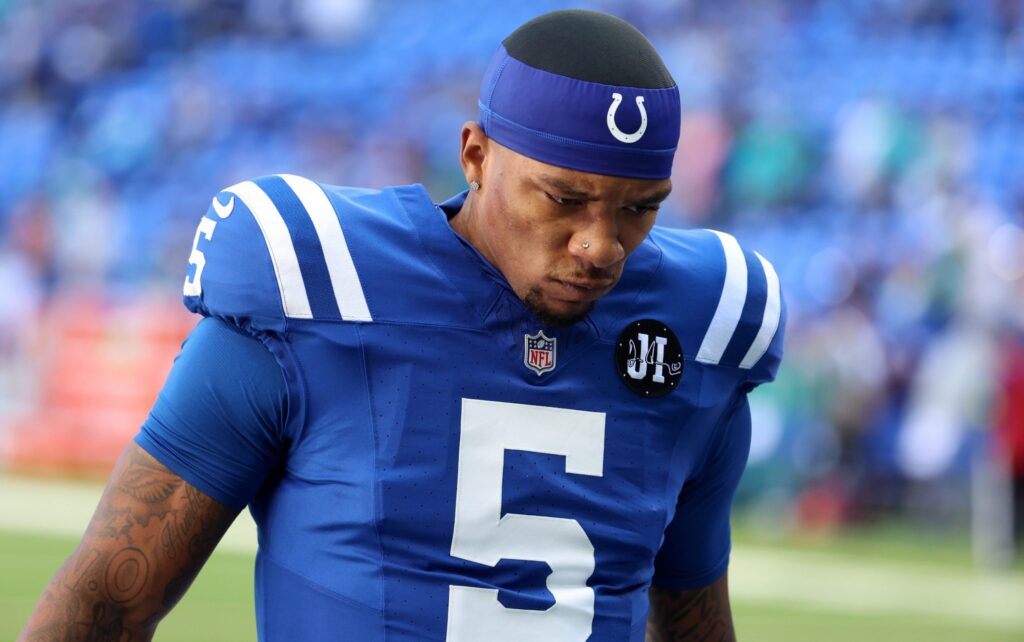
A recent name that comes to mind is Indianapolis Colts quarterback Daniel Jones, who also experienced a similar career resurgence after leaving the New York Giants after six seasons. Before his season-ending injury, Jones was doing well: 19 touchdown passes, eight interceptions and over 3,000 yardspassing, leading the Colts to an 8-4 record and first place in the AFC South. The list of comparable stories is getting longer as time goes on, but the question boils down to why this has been happening so often lately. Before the 2020s began, you think about the volume of great long-term, high-quality, developed quarterbacks we saw in the 2010s, even on bad teams in the league.
In the 2010s, the list of highly developed “franchise quarterbacks” was shocking, especially if you were to compare it to today, a deep list including guys like Tom Brady, Drew Brees, Aaron Rodgers, Peyton Manning, Philip Rivers, Andrew Luck, Ben Roethlisberger, Russell Wilson, Matthew Stafford, Matt Ryan, Joe Flacco, Tony Romo, Cam Newton, Eli Manning, Andy Dalton and the list goes on. In the 2010s, great quarterback play felt commonplace; having a highly developed,above-average-to-Hall-of-Fame-level quarterback was not a rarity. So, the question is: as we are a little over halfway through the 2020s, does the NFL have a quarterback development problem?
The answer is complicated and hard to find. Many quarterbacks today are unbelievably talented, making it difficult to distinguish what may be overwhelming talent or success due to great development, with guys like Patrick Mahomes, Josh Allen, Lamar Jackson, Joe Burrow, Matthew Stafford, Jalen Hurts, DakPrescott and the young blood of the league, guys like Drake Maye, Jayden Daniels and Caleb Williams; the talent is clearly there across the league. But the question is: why does it seem as though the list of incredibly talented, highly developed franchise quarterbacks is shorter now than in past decades? The answercould possibly be a mix of coaching and broad development issues starting at the collegiate level: many players’ growth isstunted by constant coaching staff changes and offensive systemissues. Common issues in football today, such as a very vanilla offensive system, especially in college, can stunt a quarterback’s development despite his natural talent; by the time he enters the league, the talent may not be enough to overcome a bad situation.
If quarterback development is truly a league-wide issue today, then it is clear franchises still do not know the fix. What we do know is that quarterback talent is still there; Hall of Fame talentat the quarterback position still exists. In today’s NFL, it matters more than ever whether a player is in the wrong system, being held back by poor coaching and development, or a mixture of all three. I believe that if there is truly an issue with quarterbackdevelopment in today’s NFL, the answer will have to be found in the way teams across the league develop their quarterbacks, how franchises choose to develop these players, who they allow to coach and develop their young talent, and what system the quarterback is placed in. Of course, one thing we know for sure:talent and potential are there across college and the NFL every year; how teams choose to “develop” these quarterbacks as they enter the league will likely remain a question for years to come.