
More NFL Teams Are Building Indoor Stadiums: Here’s Why It Could Be A Mistake (9-14-26)
By Nyle Griffin
Headline Photo Credit: AP Photi
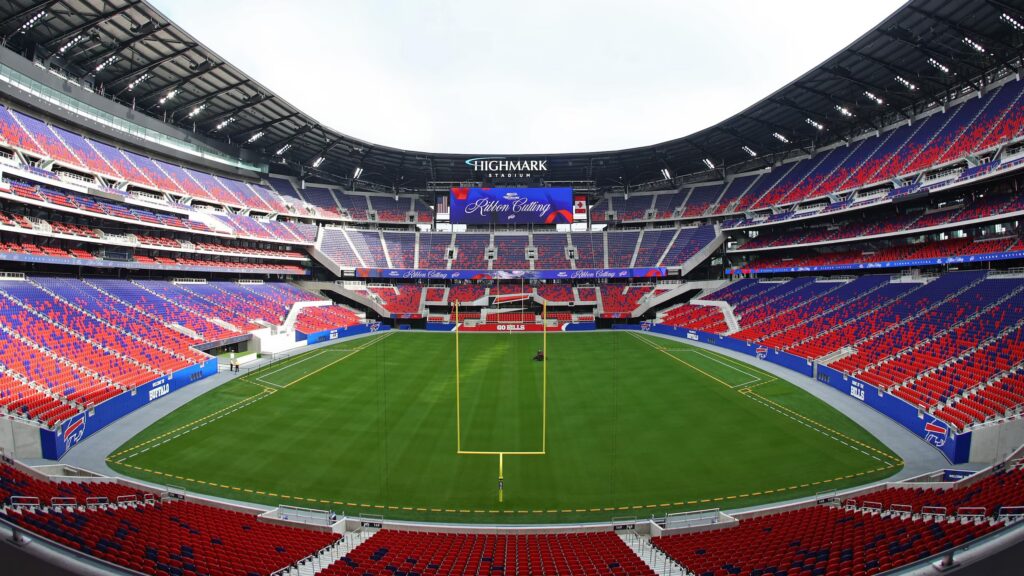
Heading into the 2026-27 NFL season, the Buffalo Bills will play in their brand-new stadium, Highmark Stadium in Orchard Park, New York. One thing that stands out about the new stadium is that it lacks a full roof or dome, unlike the last four organizations that built a new stadium in the last decade. The Buffalo Bills organization chose to keep the tradition of playing in frigid conditions alive by leaving the playing field fully exposed to weather like snow and wind.
Over the past few years, the league has debated a future in which most, if not every, NFL team will eventually play in a stadium with a roof, whether retractable or a fixed dome. The Bills, the most recent team to build a new stadium, have raised a question many other teams in cold regions are asking: Is it worth building a stadium with a roof when going without one could give us an advantage?
Of the 32 teams in the league today, 11 play their home games indoors under a fixed dome or retractable roof. This number is starting to rise at an alarming rate, with teams currently in the process of building or planning a new stadium that will feature a roof or dome, including the Tennessee Titans, Cleveland Browns, Washington Commanders, Kansas City Chiefs, and a host of other teams predicted to be included in the trend once they start planning or building their new stadium.
The key question is, however, with teams such as the Buffalo Bills opting out of the roof or dome, what other teams could we see follow suit, and what advantages could these teams possibly have in the foreseeable future when a minimum of half of the teams in the NFL will be playing indoors throughout the 2030s and beyond. We have already seen the answer to this question play out on numerous occasions throughout NFL history, and more recently.
In today’s NFL, many great teams reside in cold regions. In addition to the Bills, some of the best teams in the league as of late include the Philadelphia Eagles, Chicago Bears, Denver Broncos, New England Patriots, and most notably the Kansas City Chiefs dynasty, which found its rise in its current Arrowhead Stadium, which does not feature any roof or dome. The Chiefs previously made the playoffs 10 years in a row from 2015 to 2024, playing in Arrowhead Stadium in Kansas City, Missouri.
Throughout the 10-year run, the Chiefs put out not only deep, talented teams and one of the league’s best crowds but also freezing conditions for any visitor who found themselves at Arrowhead Stadium in the playoffs. The Chiefs currently holdan 11-1 record at home when playing in temperatures of 35 degrees Fahrenheit or colder, notably recording a 26-7 win onJan. 13, 2024, against a warm-weather Miami Dolphins team, where kickoff was at -4 degrees Fahrenheit, truly emphasizing the advantage outdoor stadium teams can have against certain teams.
Even more recently, the 2025 Super Bowl champion Philadelphia Eagles were able to make their run to the big game in large part due to their home-field advantage throughout the playoffs, which culminated in an NFC championship game at Lincoln Financial Field in Philadelphia, Pennsylvania, against the Los Angeles Rams, in which the game saw cold and snowy conditions; the Eagles barely won the game 28-22, which many attribute to the weather giving the Rams issues, who were used to playing under a roof in Los Angeles.
Instead of looking at specific examples, we can look broadly across the league at one of the most shocking statistics we’ve seen in the last decade: cold-weather and outdoor host teams have a 15-1 record in outdoor playoff games against dome or warm-weather teams. The advantage isn’t a theory or a myth; it is reality, and it could spell problems for at least half the league over the coming years. This entire statistic could make teams think twice, as we have recently seen with the Buffalo Bills.
As NFL franchises across the league began to plan out and construct what their future homes will look like, a question the Bills organization asked itself may find its way into other buildings around the league as well: what advantages could be gained by going against the grain, despite the appealing prospects of potentially hosting a Super Bowl or playing games in a stable weather environment? Perhaps teams like the Chiefs and Eagles have laid the foundation for what that advantage will look like in the modern NFL.
In today’s league, having a great team and a passionate fan base is priceless. Still, when you add a home-field advantage in the playoffs when your stadium sits in a cold environment, you now have an even bigger advantage than you could imagine; it’s what could be the edge when facing a team that plays under a roof or is from a warm-weather climate such as Miami, Los Angeles, Atlanta, Indianapolis, Arizona, and the list goes on. What NFL teams in the country’s colder regions choose to do when building a new stadium remains to be seen. Still, that simple choice could be the difference between a playoff loss and a Super Bowl title— just ask Philadelphia.